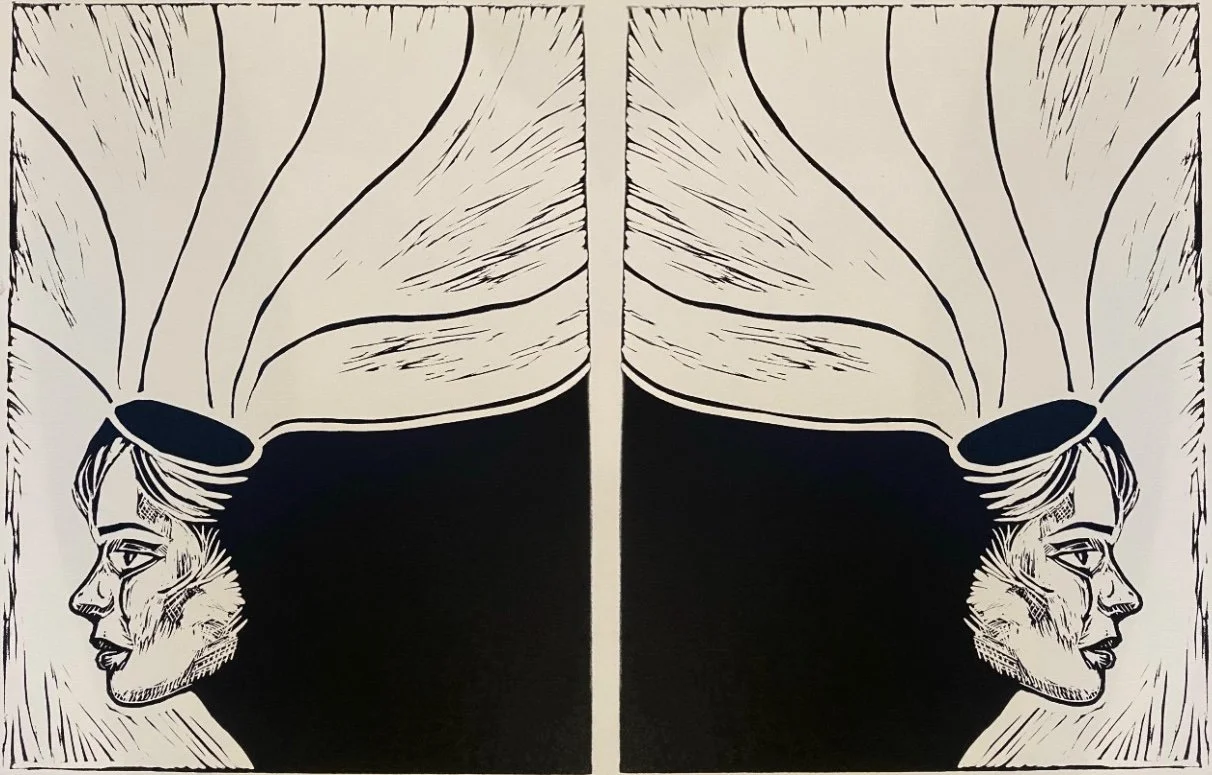
Portrait of a vanishing
Linoleum Relief Print
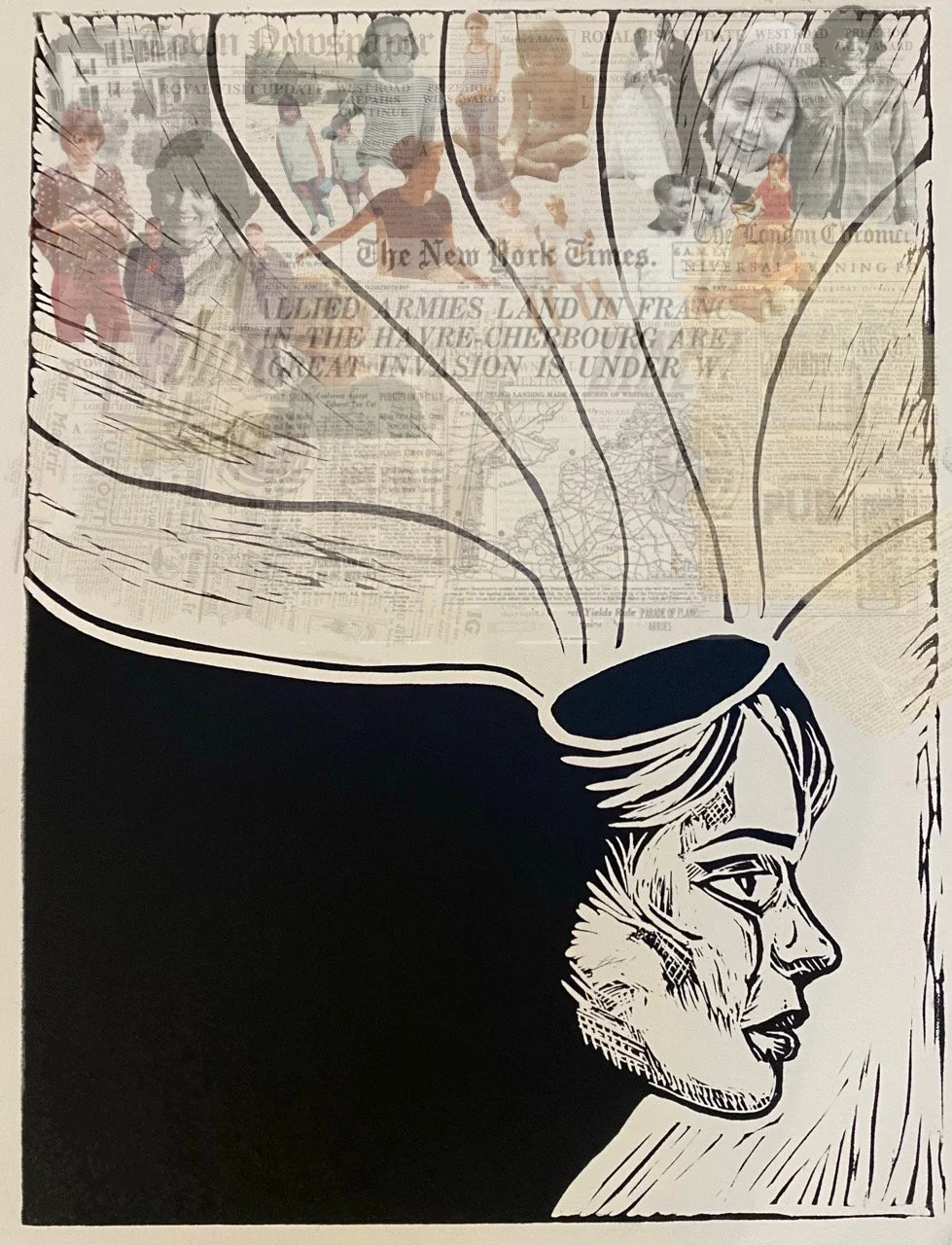
Using portraiture as both archive and inquiry, Portrait of a Vanishing investigates the ways memory constructs, preserves, and transforms the self within the shifting terrain of Alzheimer’s disease. Taking my paternal grandmother as its subject, the portrait unfolds as a dreamlike constellation of lived experiences, relationships, and histories accumulated over a lifetime. The work is a meditation on memory’s fragile architecture; the ways in which identity is assembled, sustained, and altered through remembering and forgetting.
Beginning with an original relief print, seen at the bottom of the page, the piece was further developed through the layering of family photographs and archival materials, transforming her silhouette into a repository of personal and collective history. A concrete through-line that is invulnerable against time and body’s erosion. As these fragments merge, overlap, and dissolve into one another, they reflect the gradual erosion of memory that characterizes Alzheimer’s while simultaneously honoring the persistence of a life that refuses to be reduced to illness alone. The work reflects both loss and continuity, examining the ways identity endures even as memory becomes fragmented.
The composition, particularly its use of negative space, explores the tension between complete short-term confusion and the dreamlike collage of faces, places, and impressions that constitute long-term identity. It asks how and why certain memories remain accessible while others disappear. What determines which moments are preserved, and which are lost? What determines our ability to retrieve, and more importantly, trust those which can be accessed? What is the landscape of our psyche? Where are preserved memories stored? Where are lost memories stored? Ultimately, the piece considers what is lost, what endures, and how we continue to remember those we love in the face of forgetting.
Original Linoleum Print, Before Digital Overlay